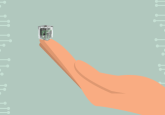
Soft, flexible cortical device could transform epilepsy seizure treatment

Using a novel Shape-Morphing Cortical-Adhesive (SMCA) sensor, researchers have created a closed-loop epilepsy treatment system that suppresses seizures in animal models.
One type of closed-loop epilepsy treatment comprises transcranial-focused ultrasound neurostimulation (tFUS) coupled with a cortex-interfacing device. Researchers from a multi-institutional team created a soft, flexible and adhesive SMCA sensor, which circumvents an existing flaw in cortex-interfacing devices by recording an interference-free signal, successfully preventing seizures.
There is an urgent need for alternative epilepsy treatments as approximately 20–30% of patients don’t respond to available medications. While surgery to ablate lesions is an option, it is complex and risky. A less invasive option is neuromodulation, which suppresses brain hyperexcitability (the cause of epilepsy) by stimulating the lesion directly with mechanical, electromagnetic or optical energy.
One form of highly precise neuromodulation that doesn’t cause permanent damage is tFUS. To be effective, tFUS needs to be combined with a cortex-interfacing device that adjusts stimulation according to brain activity.
Altius System receives US FDA approval for post-amputation pain
The device aims to alleviate chronic intractable phantom and residual lower limb post-amputation pain in adult amputees.
Existing cortex-interfacing devices have high stiffness and low shape-adaptability, meaning they don’t conform to the wavy structure of the brain. During tFUS, this causes interference from the mechanical pressure waves, which means it cannot accurately record brain activity.
The novel SMCA sensor is soft, flexible and adhesive to align with the brain’s surface allowing for consistent, accurate monitoring of brain activity during tFUS.
When the researchers conducted in vivo tests of the SMCA sensor in rat models of epilepsy, it recorded interference-free brain activity during tFUS.
Utilizing the SMCA sensor, the researchers created a closed-loop system to control seizures. The SMCA sensor detects early indications of seizures and adjusts tFUS accordingly. The system successfully stopped seizures in real time, allowing for personalized and adaptive epilepsy treatment.
The SMCA sensor features a layer of catechol-conjugated alginate hydrogel that rapidly and strongly bonds with brain tissue. A self-healing polymer is the device’s substrate and it softens and conforms to the brain’s surface at body temperature, minimizing interference.
Donghee Son (Institute for Basic Science, Daejeon, South Korea), senior author of the study stated, “Through our study on the brain-adhesive soft bioelectronics platform, we have overcome a major challenge in the field of brain interfaces by achieving high-quality electrocorticography coupled with focused ultrasound stimulation without artifact interference. We expect our technology to become a cornerstone of a next-generation biomedical platform that enables precise diagnosis and personalized therapy for intractable neurological disorders.”