Pulse pressure app paves the way for more accessible blood pressure monitoring
A smartphone application, which uses gravity to assess pulse pressure, could allow for anyone with a smartphone to monitor their blood pressure.
Lowering systolic blood pressure is the most significant change individuals can take to decrease their risk of heart disease. In underserved populations, access to cuff blood pressure devices or regular hospital appointments can be limited. A multi-institutional group of researchers have sought out a solution that makes it easy to track blood pressure via a phone application.
The Android application works by taking a measurement when an individual raises their hands, which causes a change in hydrostatic pressure in their thumbs due to gravity. The phone’s accelerometer converts this change into a relative change in pressure. The application then combines the hand-raising motion with guided thumb movements on the smartphone to determine the individual’s pulse pressure, which is the deviation between systolic and diastolic blood pressure.
While pulse pressure isn’t usually a metric used to calculate cardiovascular disease risk, this research has demonstrated that it is highly correlated with high blood pressure.
Non-invasive alternative for continuous blood pressure monitoring
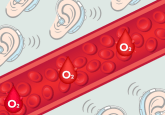
Resonance sonomanometry could provide a quick and easy method for obtaining continuous blood pressure readings.
To assess the validity of the smartphone application, the researchers compared its measurements to that of validated automatic blood pressure arm cuff device. In these tests, the app delivered pulse pressure measurements comparable to those provided by the cuff devices, varying from them by less than 8 mmHg.
Vishaal Dhamotharan, co-author of the study (University of Pittsburgh, PA, USA) commented: “This app would be really useful in low-income settings where people may not even have existing access to blood pressure tools. Being able to measure blood pressure more frequently would allow an individual to track any significant changes in blood pressure, monitor for hypertension, and be able to manage their conditions with that knowledge.”